DOI: https://doi.org/10.5281/zenodo.22085878 · PP.107-126 · Pub. Date:
25 Aug. 2026
Food waste has turned out to be a global concern with its various forms, creating a substantial impact on every pillar of sustainable development practices. Food waste has many contributors, such as various industries, their operations, waste-generating consumptions, etc. Educational institutions, especially universities, could also be considered significant epicentres of food waste. With the help of the Value-attitude-behaviour hierarchy, we examined the reasons behind university students’ food waste reduction behaviour. We hypothesize that students’ perceived value towards food waste leads to their food waste reduction behaviour. Additionally, we also examined whether gender and food habits can create any additional impact on this relationship. The results confirmed a statistically significant link between perceived value of food waste and waste reduction behavior among students. However, gender and food habits do not have any impact on this relationship. We also found that social norms on food waste do not have any impact on students’ behaviour. Students’ upbringing and their awareness of minimizing food waste can elevate in fulfilling various sustainable consumption parameters under UN norms of SDG goals
DOI: https://doi.org/10.5281/zenodo.22085263 · PP.96-106 · Pub. Date:
24 Aug. 2026
Time is one of the most valuable resources available to college students. Effective management of time enables students to organize academic activities, complete assignments on schedule, reduce procrastination, and maintain a balance between academic and personal responsibilities. This study examines the influence of time management on the productivity of college students in Bilaspur, Chhattisgarh. The study adopts a quantitative research approach and uses a survey questionnaire as the primary method of data collection. A sample of 100 college students was considered for the study. The questionnaire focused on planning habits, prioritization, punctuality, procrastination, distractions, and perceived productivity. The findings indicate that students who reported better time-management practices also reported higher levels of productivity. The study further suggests that planning daily activities, setting priorities, following schedules, and reducing distractions are important factors associated with student productivity. The findings provide useful insights for students and educational institutions seeking to improve academic effectiveness through better time-management practices
DOI: https://doi.org/10.5281/zenodo.22073987 · PP.85-95 · Pub. Date:
23 Aug. 2026
This study examines the role of digital financial tools in enhancing financial inclusion in rural areas, focusing on their ability to overcome geographical barriers, support economic empowerment, and improve access to financial services. The study adopted a qualitative research approach based exclusively on secondary sources, including published research papers, academic journals, government reports, and online resources. A descriptive and analytical method was used to review, interpret, and synthesize evidence without employing quantitative or statistical techniques. The findings indicate that mobile banking, digital wallets, UPI, and platforms improve accessibility, convenience, affordability, savings, payments, credit access, entrepreneurship, and women’s financial empowerment. However, inadequate infrastructure, limited digital and financial literacy, cybersecurity risks, privacy concerns, trust deficits, and socio-cultural preferences continue to constrain adoption. The study concludes that sustainable financial inclusion requires infrastructure, literacy programmes, user-friendly platforms, consumer protection, and government support. Future research should employ empirical methods to examine adoption behaviour, regional differences, cybersecurity, trust, and socioeconomic impacts.
DOI: https://doi.org/10.5281/zenodo.22073849 · PP.74-84 · Pub. Date:
23 Aug. 2026
Abstract
Communication and language operate as complex, interrelated systems shaped by multiple intersecting dimensions that cannot be adequately understood in isolation. This study examines the multidimensional nature of communication and language through an integrated analysis of linguistic structure, sociocultural context, technological mediation, and cognitive processing. Drawing on a sequential mixed-methods design that combines qualitative discourse analysis of 48 authentic communicative events (24 face-to-face and 24 digitally mediated) with a quantitative survey of 312 participants across three linguistic communities, the research investigates how these dimensions interact to shape meaning-making, communicative competence, and identity construction in both traditional and digitally mediated environments. Findings reveal that technological platforms significantly reconfigure traditional linguistic norms while amplifying sociocultural and cognitive factors, leading to the emergence of hybrid communicative practices. Participants frequently employed multimodal resources, adaptive politeness strategies, code-meshing, and platform-specific conventions to achieve communicative goals under varying conditions of cognitive load and sociocultural expectation. Factor analysis confirmed four interrelated yet distinct dimensions accounting for 68.4% of variance, while multiple regression models demonstrated that technological factors significantly predicted linguistic adaptation (β = .41, p < .001) and sociocultural adaptation (β = .37, p < .001). Cognitive load showed a significant negative association with communicative satisfaction in high-stakes intercultural digital interactions. The study identifies persistent research gaps in the integrated treatment of these dimensions and proposes a multidimensional analytical framework. Results contribute to theoretical refinement in applied linguistics and communication studies and offer practical implications for language education, intercultural communication training, and the design of communication technologies. Limitations concerning sample scope and measurement of cognitive processes are acknowledged, and directions for future research are outlined.
Keywords: multidimensional communication, language studies, communicative competence, digital discourse, sociocultural linguistics, cognitive dimensions of language, hybrid communicative practices
DOI: https://doi.org/10.5281/zenodo.22073624 · PP.58-73 · Pub. Date:
23 Aug. 2026
Digital technologies have expanded the supply of information well beyond what individuals can process. Human attention, constrained by finite time and cognitive limits, has therefore become a contested resource that platforms, advertisers, creators and firms compete to obtain. Research on attention is well developed within economics, cognitive psychology, marketing, information systems and media studies, yet it remains dispersed. What is underdeveloped is an integrative account of how attention moves from a scarce human capacity to an observable behavioural resource, becomes convertible into different forms of economic value and simultaneously generates social externalities. This conceptual paper develops such an account. It first specifies five properties that qualify attention as an economic resource and then sets out a seven-stage framework tracing information abundance through attention scarcity, capture, allocation, engagement, behavioural signals, conversion and value creation. The framework is cyclical rather than linear: behavioural data generated at Stage 5 feeds back into capture at Stage 2. A parallel pathway records externalities that remain unpriced in the private return. The paper addresses recent cognitive-science objections to treating attention as a unified allocable resource and defines the framework at the level of observable behaviour accordingly. Five propositions are advanced for empirical testing. The framework proposes that economic value is likely to depend more strongly on attention quality and convertibility than on attention volume alone.
DOI: https://doi.org/10.5281/zenodo.22070581 · PP.54-57 · Pub. Date:
23 Aug. 2026
Abstract
Nuakhai, a prominent agricultural festival celebrated in the western region of Odisha, holds profound cultural and socio-economic significance. Rooted in the agrarian traditions of the region, this festival marks the first harvest of the season and is observed with deep reverence and joy. This paper explores the cultural significance of Nuakhai, examining its rituals, traditions, and the role it plays in reinforcing social bonds and community identity. Additionally, the paper delves into the socio-economic impact of the festival on the rural economy of Western Odisha, highlighting how Nuakhai sustains agricultural practices, stimulates local economies, and fosters social cohesion. By analyzing the multifaceted aspects of Nuakhai, this study provides insights into how cultural traditions are intertwined with the socio-economic fabric of rural communities in Odisha.
DOI: https://doi.org/10.5281/zenodo.22070232 · PP.46-53 · Pub. Date:
23 Aug. 2026
This paper presents a systematic literature review of the relationship between capital structure and firm profitability. Drawing on foundational theory, including the Modigliani-Miller irrelevance and tax-adjusted propositions, trade-off theory, pecking order theory and agency cost theory, alongside empirical studies from developed markets (the United States, France, the G7 economies), emerging markets (Ghana, Jordan, Egypt, Vietnam) and cross-country panels, the review synthesises evidence on how leverage relates to profitability measures such as return on assets, return on equity and Tobin's Q. The findings show no single, generalisable relationship: some studies report a positive association consistent with the disciplining role of debt under agency theory (Margaritis & Psillaki, 2010; Abor, 2005), others report a negative association consistent with financial distress and pecking order behaviour (Zeitun & Tian, 2007) and still others find no statistically significant relationship at all (Ebaid, 2009). The review further identifies firm size, asset tangibility, ownership structure, industry classification and macroeconomic conditions as key moderating factors and highlights recurring methodological gaps, including short panel windows, unresolved endogeneity between capital structure and performance and limited sector-level disaggregation. The review concludes that future systematic work should treat the capital structure-profitability relationship as context-dependent rather than search for a single universal effect and should prioritise longer panels, causal identification strategies and industry-specific analysis
DOI: https://doi.org/10.5281/zenodo.22069585 · PP.35-45 · Pub. Date:
23 Aug. 2026
The rapid integration of generative artificial intelligence (AI) into digital marketing has created new opportunities for content creation while raising concerns about authenticity and consumer trust. This study examines Human–AI co-created marketing content, AI disclosure, perceived authenticity, consumer trust, and purchase intention through a descriptive and conceptual review of secondary data. The study analyses published research to understand how Human–AI co-creation differs from human-generated and AI-generated content and how AI disclosure influences consumer perceptions. The literature indicates that Human–AI co-created content may combine the creativity and novelty of AI with the authenticity and credibility associated with human involvement. AI disclosure produces mixed effects, potentially increasing transparency while also triggering scepticism. Perceived authenticity and consumer trust emerge as important influences on purchase intention, while AI familiarity, AI literacy, and persuasion knowledge may shape consumer responses. The study concludes that Human–AI co-creation offers significant potential, but further primary research is required to validate these findings empirically.
DOI: https://doi.org/10.5281/zenodo.22068571 · PP.20-34 · Pub. Date:
23 Aug. 2026
Abstract
Student retention in higher education in rapidly developing regions increasingly depends on physical and environmental infrastructure, yet the digital divide is seldom assessed through an environmental engineering lens. This empirical research examines the influence of deficiencies in rural environmental infrastructure, including an unstable power grid, lack of green digital resources, and eco-transit challenges, on dropout levels in higher education in Panipat District, Haryana, India. Using primary data gathered during field surveys among 521 students and dropouts from 29 rural and peri-industrial villages, multivariate regression and structural equation modeling have been used for quantifying the relationship between reliability of environmental infrastructure and academic retention. Results demonstrate that more than 43% of all digital learning disruptions occurring in rural Panipat are caused by everyday power grid failures (for more than 4 hours), which limits online educational activities significantly. It has been found that there is a strong positive correlation (r=0.68, p<0.001) between solar-powered decentralized digital nodes and dropout rates. Also, lack of climate-resilient regional transit infrastructure increased the risk of dropping out by 34% among marginalized rural women due to commute difficulties and industrial microclimate pollution exposure.
This study shows that there is no way in which digital educational access can be provided through the sole mechanism of distributing devices to students because it involves the creation of an environmentally engineered system. Closing the educational gap and improving educational equity in the transitioning industrial-rural areas will involve creating decentralized green power grids, solar-powered learning centers for the community, and sustainable public transportation corridors.
ByPragneshkumar Nareshbhai KapatelDr. Bharti L. Vaja
DOI: https://doi.org/10.5281/zenodo.22067892 · PP.7-19 · Pub. Date:
23 Aug. 2026
The rapid advancement of information and communication technologies has transformed library and information science from traditional print-based services into globally connected knowledge systems. Libraries without borders now integrate digital repositories, electronic resources, cloud computing, open access, artificial intelligence, virtual reference services, data management, and resource-sharing networks to provide equitable access beyond geographical, temporal, linguistic, and socioeconomic barriers. This study analyses global changes, challenges, and opportunities in library and information science through document analysis and descriptive and analytical methods, using official and scholarly sources. Emerging technologies offer significant opportunities through AI, digital preservation, multilingual information retrieval, and virtual services. However, the digital divide, copyright, privacy, cybersecurity, AI bias, misinformation, linguistic disparities, and changing professional skills remain major concerns. Despite 68% global Internet connectivity in 2024, 2.6 billion people remained offline, highlighting persistent inequalities. The study concludes that libraries without borders must remain inclusive, ethical, multilingual, and rights-based, while librarians increasingly serve as information evaluators, digital and AI literacy educators, research supporters, privacy advocates, and knowledge mediators.
DOI: https://doi.org/10.5281/zenodo.22067626 · PP.1-6 · Pub. Date:
23 Aug. 2026
Abstract: Educational research has recently shifted towards evidence-based approach, digital transformation and inclusiveness, which are closely related to fundamental principles such as constructivism (active knowledge construction by students), connectivism (knowledge development through digital networks), humanistic theory (holistic personality development) and systems theory (education as a whole system). These trends, along with the inclusion of IKS as per NEP 2020, see the rise of AI-personalized learning, VR/AR based experiences, Competency-Based Assessment and multidisciplinary research. Evidence such as over 93% scores in IKS courses on SWAYAM and 53% improvement in programs like Khushishala show that this approach enhances cultural awareness, interdisciplinary thinking and sustainable skills in students, while addressing challenges such as digital inequality and faculty training requires collaborative efforts. These trends prepare students to be thinkers, innovators and responsible citizens, realizing the goal of a developed India. Under NEP, the National Research Foundation (NRF), 5% credit for IKS, has accelerated trends such as AI-based learning and inclusive pedagogy, resulting in high performance and increased cultural awareness in SWAYAM courses. This policy aligns research with lifelong learning and the goal of a developed India, with the aim of making students thinkers and innovators through evidence-based implementation and collaborative efforts.
About TRB Publications
Professional publication services for authors, researchers, academicians, and organizations worldwide.
An Imprint of TRB Business Solutions
TRB PUBLICATIONS (An Imprint of TRB BUSINESS SOLUTIONS) was established in the year 2025 with the vision of providing professional publication services to authors, researchers, academicians, and organizations worldwide. The publication aims to promote quality research, academic excellence, and global knowledge dissemination through accessible and reliable publishing solutions.
The organization is founded by Mr. Tushar Ranjan Barik and Ms. Subhashree Subhamita Barik, both coming from strong academic backgrounds with a commitment to supporting scholars and writers in achieving their publishing goals with professionalism and integrity. TRB PUBLICATIONS operates under its parent organization, TRB BUSINESS SOLUTIONS, established in 2017 by Mr. Tushar Ranjan Barik.
Diverse Catalogue
Academic, fiction, non-fiction and children's titles under one imprint.
ISBN Allocation
ISBN issued via Raja Ram Mohun Roy National Agency, Government of India.
Author-First
End-to-end support for first-time and experienced authors alike.
Dedicated Support
Friendly, knowledgeable staff here to answer every query.
What We Offer
Publishing services that take your manuscript from idea to bookshelf.
Book Publishing
Full-service book publishing for academic, fiction, non-fiction and children's titles.
Journal Publishing
Peer-reviewed journals with editorial oversight and DOI registration.
ISBN & Cataloguing
ISBN allocation through Raja Ram Mohun Roy National Agency, Government of India.
Author Support
Editorial, cover design and distribution support for every author we publish.
Featured Books
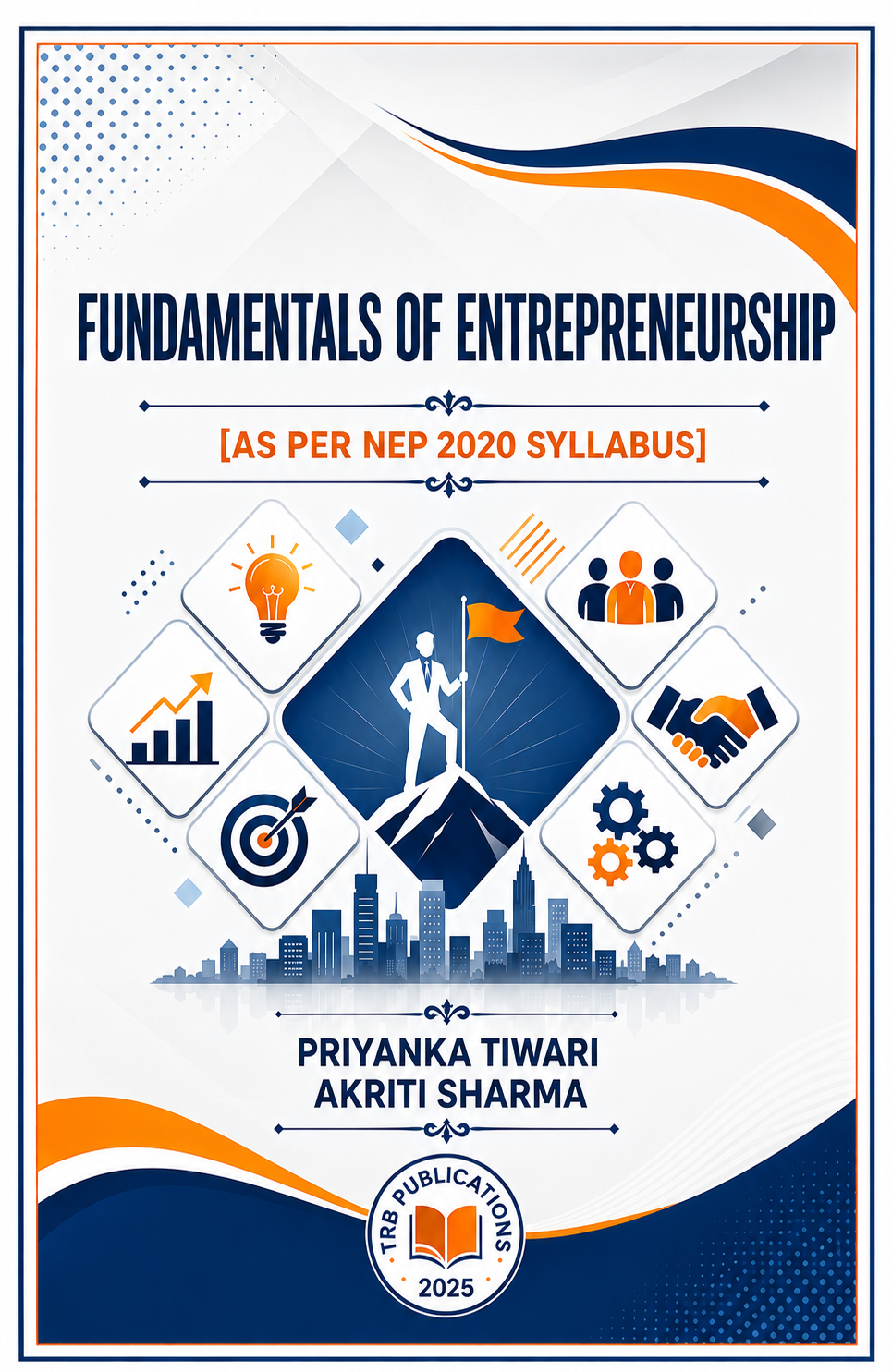
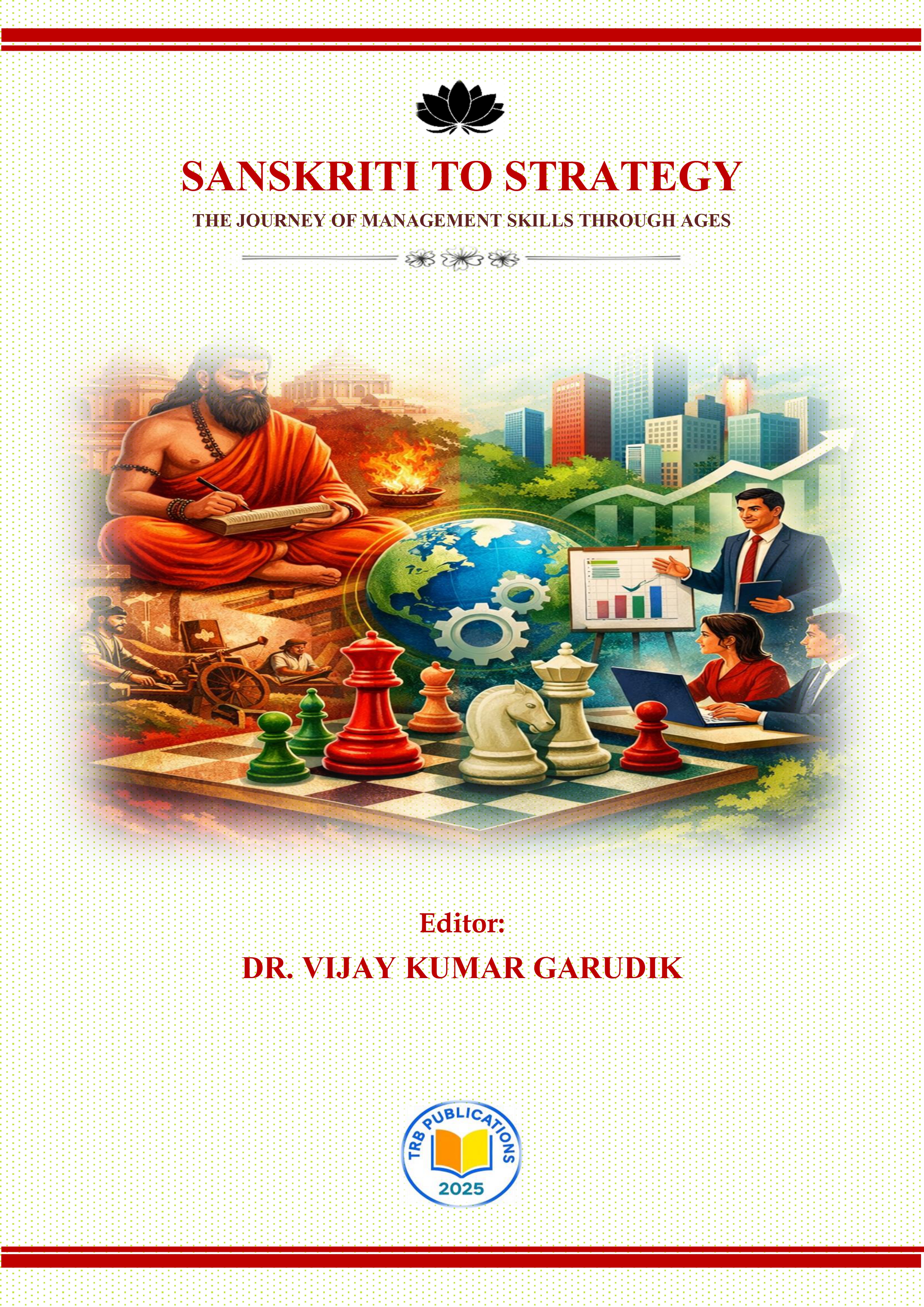
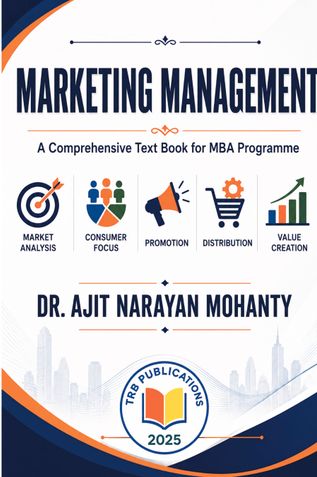
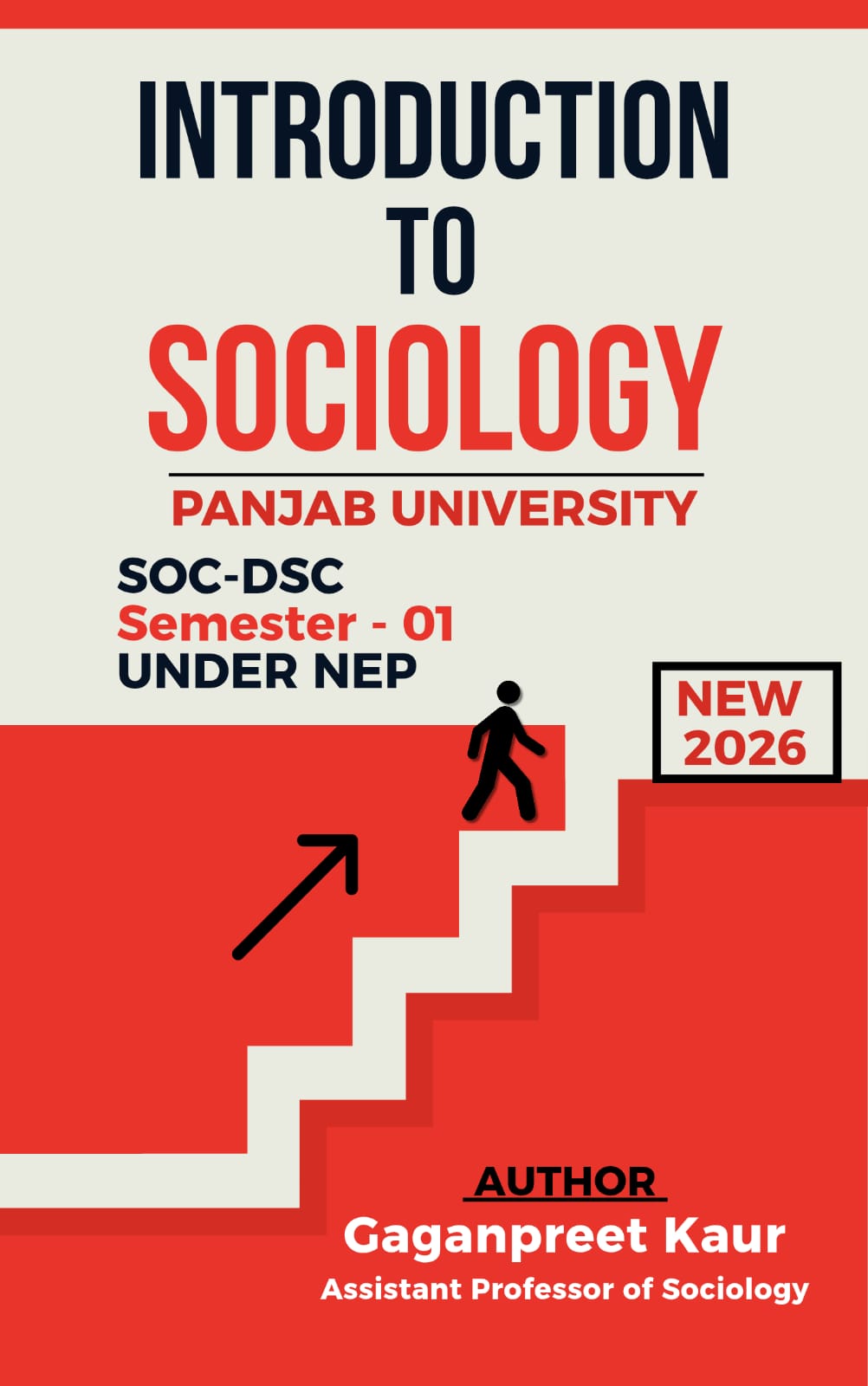
Explore a curated collection of books across various domains crafted by talented authors.
An emerging Indian publisher built on quality, care and author-first service.
Quality First
Every title goes through careful editorial review before it reaches readers.
Official ISBN
ISBN allocation through the Government of India's RMRNA agency.
Family-Owned
An independent, family-owned publisher not just another imprint.
Affordable Fee
We offer publication services at an affordable price. Book publication charges range from ₹5,000 to ₹10,000, while research paper publication fees start from just ₹950.
Wide Catalogue
Academic, fiction, non-fiction and children's titles across domains.
Real Human Support
Friendly staff who respond to every query by phone or email.
Ready to publish your work?
Submit your book or paper today our editorial team will get back to you.